
Winter in New Hampshire isn’t exactly gentle—and while we bundle up, salt the steps, and warm the car, many pet owners still assume their dogs and cats handle the cold just fine. The truth is, winter brings very real risks to our pets, and a lot of common “old-school wisdom” just doesn’t hold up.
Let’s break down six of the biggest winter pet myths so you can keep your furry family members safe, comfortable, and healthy all season long.
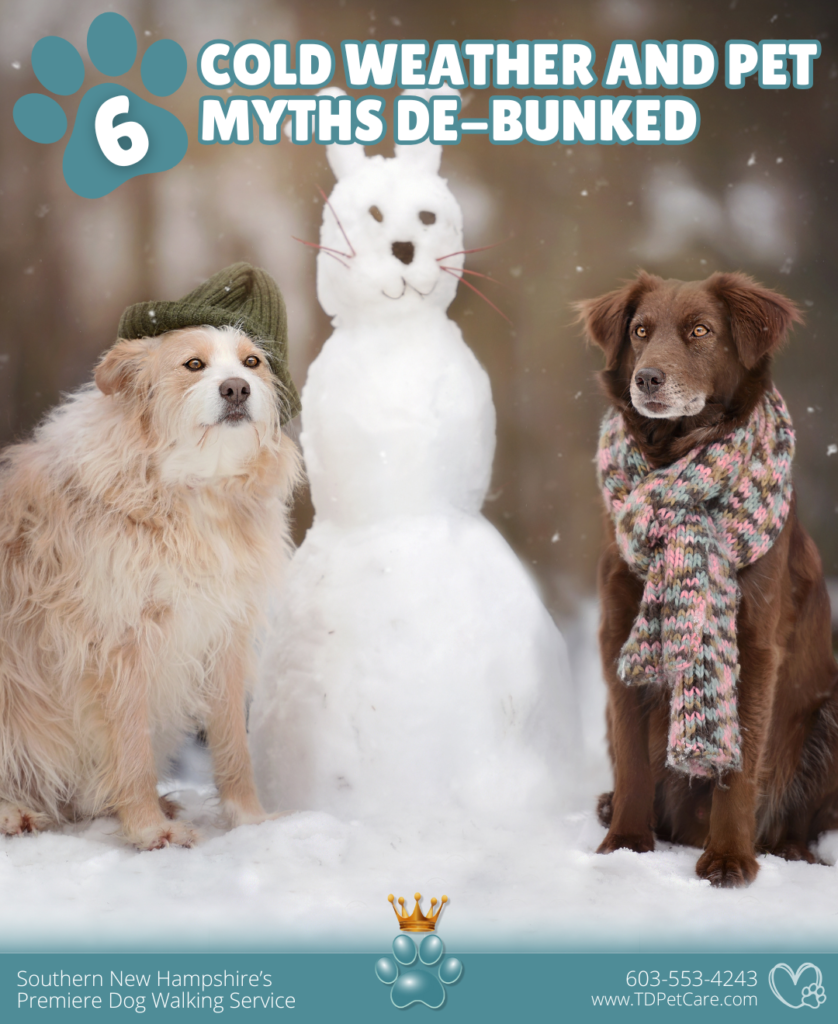
Myth #1: “Fleas won’t affect my pet in the winter.”
It’s easy to think fleas disappear when the temperature drops. Unfortunately, that’s not how it works.
The reality:
Fleas love warm, indoor environments—and our heated homes are the perfect winter getaway. Even a single flea that hitchhikes inside can survive, feed, and multiply quickly.
What to do:
- Keep your pet on year-round flea prevention.
- Wash bedding regularly.
- Vacuum carpets and upholstery to disrupt flea cycles.
Myth #2: “My pet should gain a little weight for extra insulation.”
Some owners think a thicker layer of fat will help their pet tolerate the cold.
The reality:
Extra weight doesn’t act like a cozy winter jacket. It strains your pet’s organs and joints and increases the risk of arthritis flare-ups, diabetes, and heart problems.
What to do:
- Stick with a healthy, balanced diet.
- Keep portion sizes consistent throughout the year.
- Ask your vet what your pet’s ideal weight should be.
Myth #3: “My pet’s paw pads protect them from winter weather.”
Paw pads may look tough, but winter hits them hard.
The reality:
Ice, salt, and road grit can dry out, crack, and irritate paw pads. Some de-icing products are even toxic if licked.
What to do:
- Rinse or wipe paws after each walk.
- Use pet-safe paw balm for protection.
- Consider dog booties for long or icy walks.
Myth #4: “It’s safe to leave my dog in the car during winter.”
Most people know summer cars become ovens—but winter cars can be just as dangerous.
The reality:
A parked car in winter becomes a refrigerator. Temperatures inside drop fast, and a dog can develop hypothermia in minutes.
Leaving the car running is no fix either—it increases the risk of deadly carbon monoxide buildup.
What to do:
- If your dog isn’t coming inside with you, they shouldn’t be in the car.
Myth #5: “My pet doesn’t need much water in winter.”
Cold air tricks owners into assuming their pets are drinking enough.
The reality:
Pets get dehydrated in winter just as easily as in summer. Heated homes dry out the air, and pets lose moisture through breathing, especially on brisk walks.
What to do:
- Provide a constant supply of clean, fresh water.
- If your pet drinks outside, check bowls regularly so they don’t freeze.
Myth #6: “Winter doesn’t affect arthritis in dogs.”
Arthritis and cold weather are not friends.
The reality:
Cold temperatures can stiffen joints and worsen inflammation, making it harder for arthritic dogs to move comfortably.
What to do:
- Keep walks shorter but more frequent.
- Maintain gentle exercise to keep joints limber.
- Provide a warm sleeping area away from drafts.
- Ask your vet about supplements or comfort aids.
Final Thoughts: Winter Safety Starts With Awareness
New Hampshire winters are tough, but your pet doesn’t have to be. By ditching the myths and focusing on real, practical care, you’ll help your dog or cat stay safe, warm, and healthy—even on the coldest days.
If you need help keeping your dog active this winter, Top Dog Pet Sitting & Dog Walking is here to support you. From brisk winter walks to bathroom breaks and companionship, we make sure your pet gets the care they need—no matter the weather.
Learn more or book a visit:
603-553-4243
www.TDPetCare.com
Recent Comments