
When temperatures drop and daylight disappears early, many dog owners start cutting back on walks. It feels harmless. Your dog seems comfortable inside, curled up on the couch, and the cold makes skipping “just one walk” easy.
But winter is actually when dogs need consistency more than ever — and when behavior problems quietly begin.
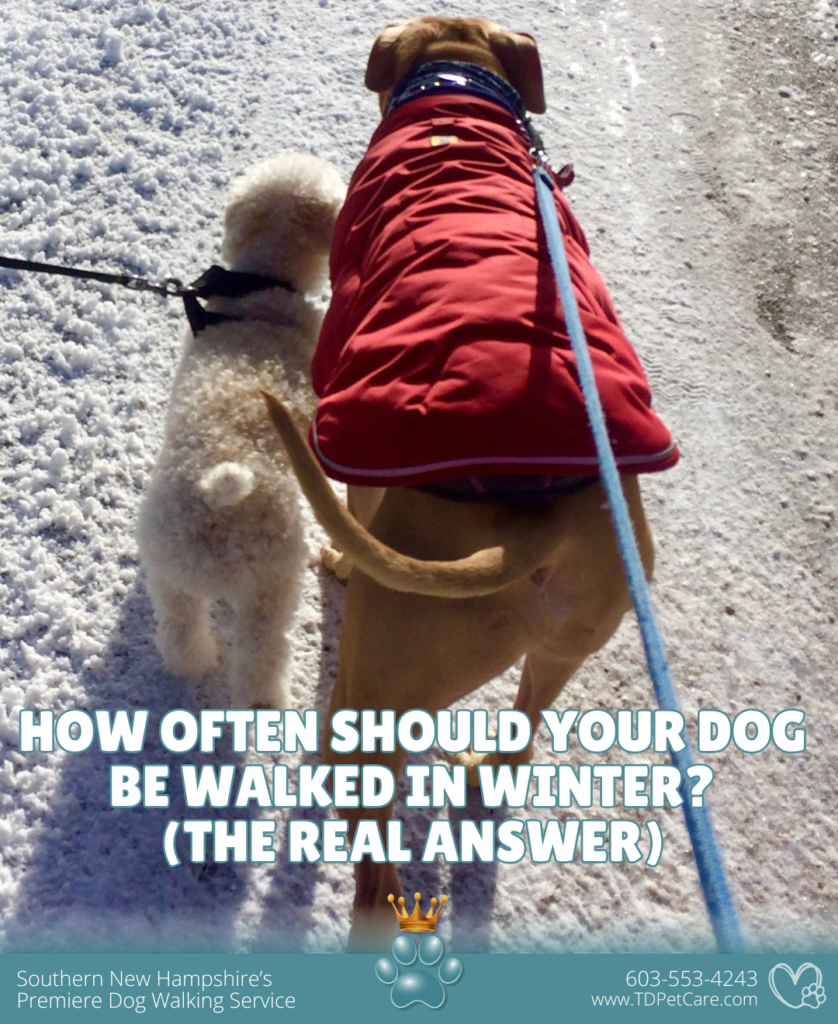
So how often should your dog be walked in winter?
Let’s get honest.
The Short Answer
Most dogs still need at least two structured walks per day in winter.
Many need more — not less — depending on breed, age, and temperament.
Cold weather doesn’t eliminate a dog’s physical and mental needs. It just changes how those needs show up.
Why Skipping Walks Causes Problems
When winter walks disappear, owners usually don’t notice the damage immediately. But within weeks, these problems begin:
- Weight gain
- Increased anxiety
- Restlessness and pacing
- Barking and whining
- Chewing furniture or shoes
- Bathroom accidents
- Depression and low energy
These aren’t “behavior issues.” They’re under-stimulated dogs asking for help.
Breed Matters More Than Temperature
Some dogs were literally built for cold weather — and get more energized in winter.
| Breed Type | Winter Walk Needs |
|---|---|
| Working & Sporting Breeds (Labs, Shepherds, Huskies, Retrievers) | 2–3+ walks/day |
| Small & Toy Breeds | 2 walks/day |
| Puppies | 3–5 short walks/day |
| Senior Dogs | 2 lighter walks/day |
| High-Anxiety Dogs | Consistent daily walks are critical |
Cold weather does not cancel biology.
Why Winter Is When Anxiety Spikes
January is one of the highest months for dog anxiety issues because:
- Humans return to work and school
- Daylight is shorter
- Dogs get less outdoor stimulation
- Routines suddenly change
Walks are more than exercise — they’re emotional regulation.
When they disappear, anxiety replaces them.
What “Enough” Really Looks Like
A winter walk still needs to include:
- Time to sniff and explore
- Steady movement
- Consistency — same times daily
- Mental stimulation
A quick leash-out-and-back is not a walk. It’s a bathroom break.
How Professional Dog Walkers Help in Winter
Professional walkers provide:
- Reliable routine when your schedule slips
- Emotional stability for your dog
- Weight and health management
- Safer walks in poor conditions
- Midday relief for dogs home alone
Most winter behavior problems never start — because consistent walking prevents them.
The Bottom Line
Cold weather doesn’t mean your dog needs less care.
It means your dog needs more consistency, not less attention.
If your schedule or the weather is making walks harder to manage, professional walking visits can quietly protect your dog’s health, mood, and behavior long before problems appear.
Recent Comments